Reduces fuel consumption
Increases engine power
Reduces harmful emissions



ECONOMY AUDIT
SETUP
WARRANTY SERVICE

NO CHANGES TO THE ENGINE DESIGN ARE REQUIRED
THE SYSTEM IS INSTALLED ON ANY VEHICLE NEXT TO AN INTERNAL COMBUSTION ENGINE AND IS COMPLETELY SAFE. IT RUNS ON GASOLINE, DIESEL FUEL OR GAS.


Reduced fuel consumption

Extending engine life

Increased torque, powerful and smooth acceleration

Increased engine power

Lowering engine temperature

Cleaner oil and cleaner cylinders resulting in less carbon buildup in the engine

Reducing harmful emissions into the environment

Complete safety for the engine

Hydrogen has a high combustion rate (~270 m/s at a=1), which promotes more complete combustion of the fuel mixture.
The HNO additive reduces the ignition delay period, reducing the amount of unburned hydrocarbons in the exhaust.
Hydrogen burns at very lean mixtures (a=0.15..20), while gasoline requires a more precise ratio (a=0.6...1.4).
Allows the engine to operate on lean mixtures without loss of stability, reducing fuel consumption.
Hydrogen increases the octane number of the mixture (up to 105-110), allowing for an increase in the compression ratio and engine efficiency.
Adding 5-10% hydrogen to gasoline reduces specific fuel consumption by 11-30%.
When HNO is burned, almost no CO or CH is formed, and NOx emissions are minimized when operating on lean mixtures (a = 2.5...2.7).
Hydrogen prevents the formation of fuel film in the intake tract and improves cylinder filling.
Mechanical losses are reduced due to smoother combustion (with correct dosage of HNO).
CONCLUSION
The use of Brown's Gas (BG) in internal combustion engines allows for significant fuel savings (10%-40%) due to improved combustion, a wider range of fuel mixtures, and increased efficiency. BG is most promising for use as a gasoline additive in hybrid systems.

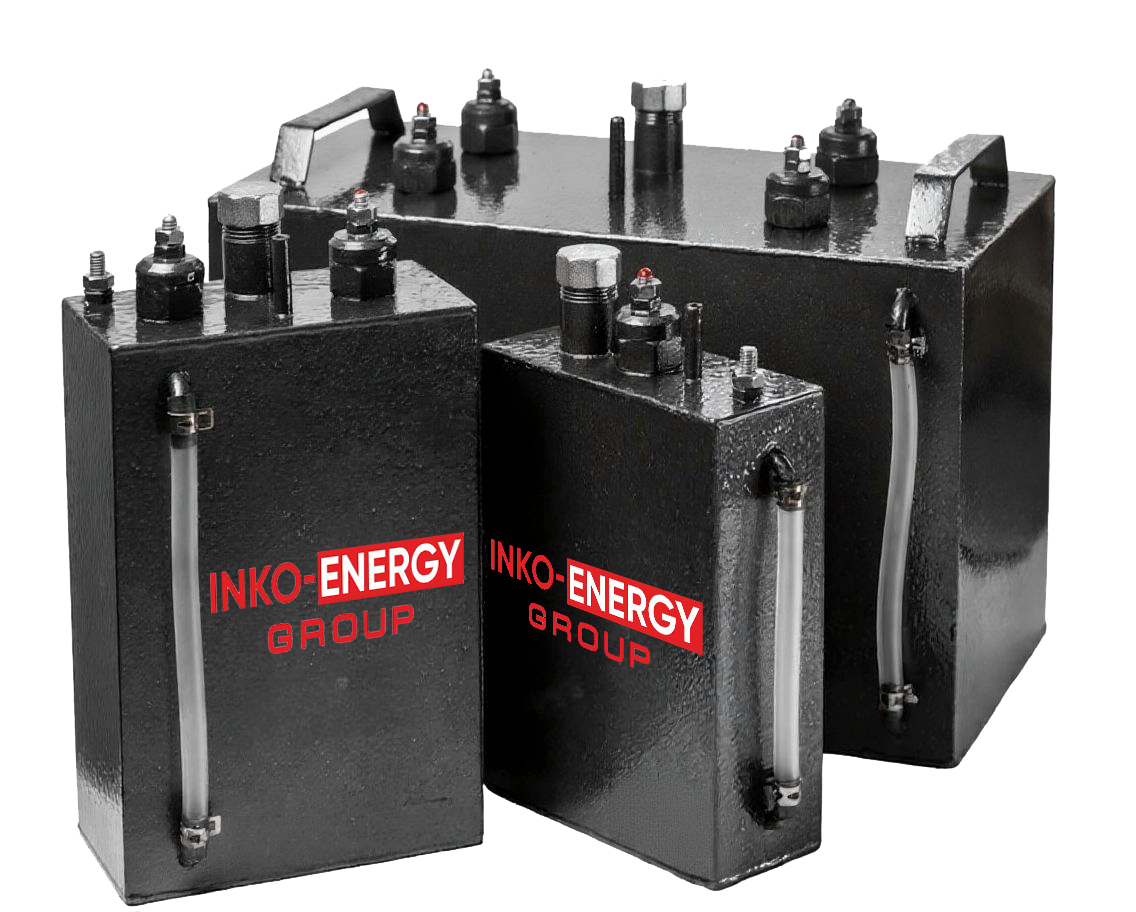
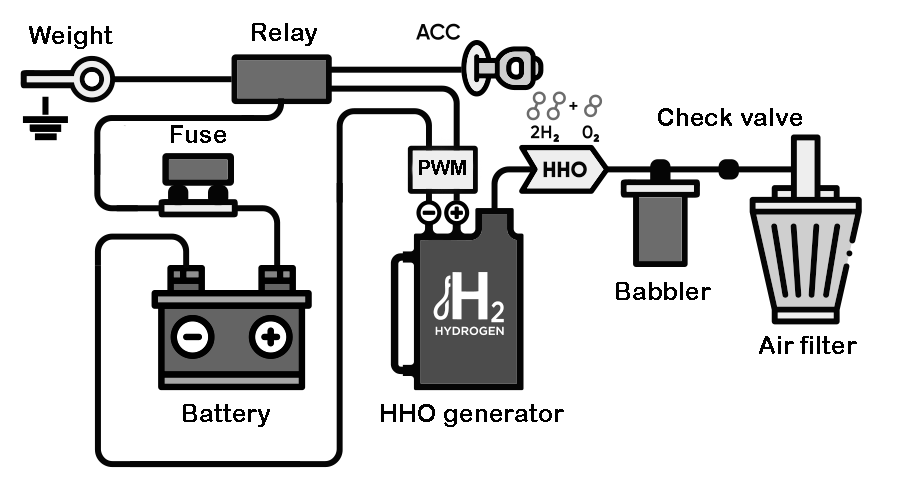
The hydrogen generator splits water into its basic elements: oxygen and hydrogen.
Hydrogen enters the intake manifold, mixes with incoming air, and then the resulting mixture is burned in the engine.

This technology makes it possible to create a wide range of lubricants with a friction coefficient of 0.0004. It forms a new metal structure (bimetal) in the friction zone, which stops selective wear of the metal.
The DF technology significantly increases the durability and reliability of machines, systems, equipment, and mechanisms in rail, aviation, automotive, marine, engineering, mining, metallurgy, agriculture, energy, and other industries.
DF lubricants represent a new “know-how” technology inlubrication materials, operating at a scale of 10-9 m. They cannot be compared to nano-structured lubricants that function at physical bonding scales of 10-6 m.
In DF lubricants, tin ions form a new surface structure on the metal in the friction pair zone (metal–metal or metal–nonmetal), bonding chemically to the surface.
ADVANTAGES OF USING DF LUBRICANTS
PROVEN THROUGH PRACTICAL APPLICATION
Long-term operation of friction pairs in “dry” conditions
Multiple increase in the service life of machines, systems, and mechanisms. Prolonged maintenance intervals and wear prevention
Faster break-in of new units or after overhauls
Suitable for friction pairs metal–metal and metal–nonmetal
New engineering possibilities — e.g., use of smaller bearings under the same load
Energy savings up to 33%, increased efficiency
Possibility of regeneration of used oils with reuse up to 2–4 times
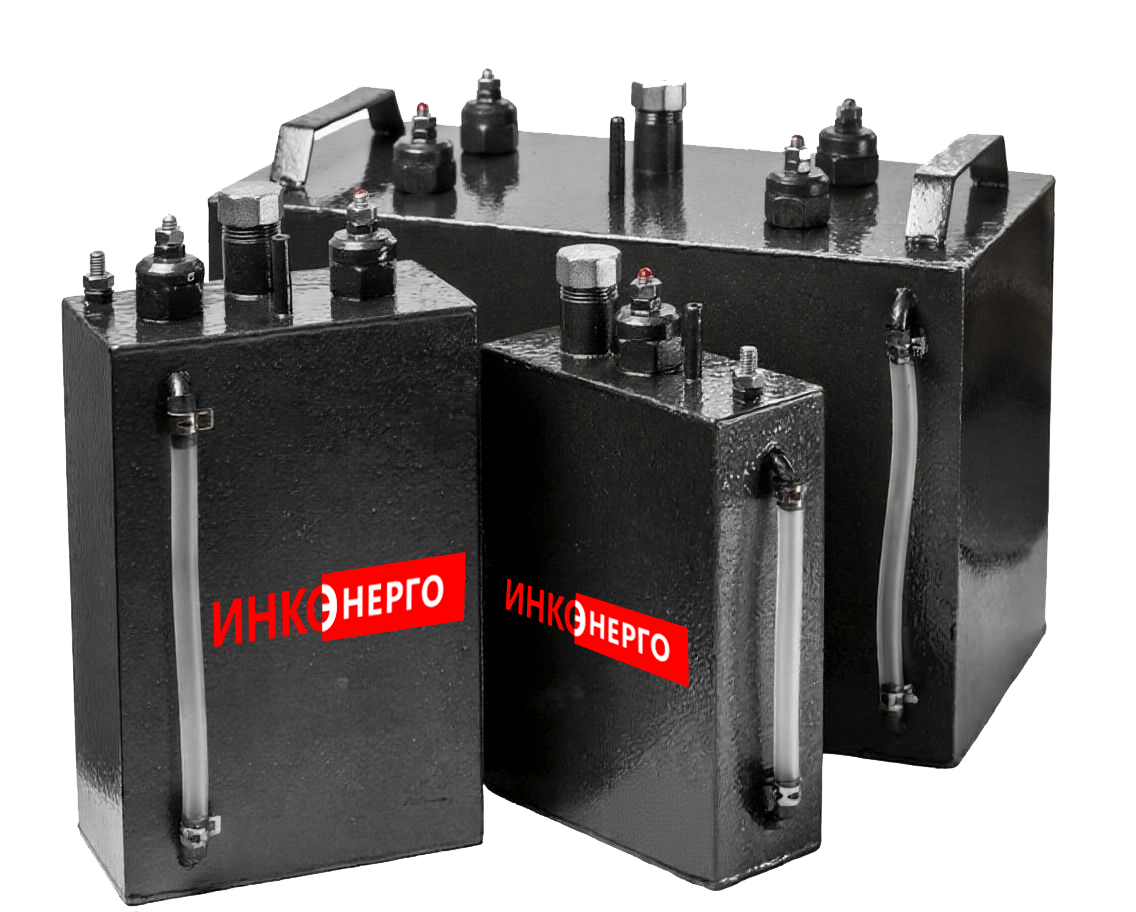

Is a hydrogen generator safe for a car engine?
The hydrogen generator is safe for the car engine because:
Is it legal to install a hydrogen generator on a car?
Installing a hydrogen generator in a car is not prohibited by law, since the device does not require changes to the car’s design or fuel type (gasoline remains the main power source).
The generator functions as an additional accessory, similar to a car alarm, a car heater, or even a rearview camera. This makes its installation completely legal.
Where is it installed? Is it safe?
The hydrogen generator is mounted under the hood of the car without the need for drilling, welding, or installing new fuel lines. This means:
This approach makes the generator convenient and safe to use, and also eliminates any complaints from inspectors.
How does a vehicle with a device undergo a technical inspection?
One of the main advantages of a hydrogen generator is its neutrality with respect to diagnostic tests. The device does not affect the parameters tested during a vehicle inspection, such as CO emissions, engine performance, or braking system condition. This means a vehicle equipped with a generator will easily pass a vehicle inspection. Furthermore, the device can be temporarily disabled during a vehicle inspection, making it even more convenient to use.
Why are hydrogen generators gaining popularity?
Besides their legality, hydrogen generators attract the attention of car enthusiasts due to their advantages:
Is there a warranty on the equipment and is it serviced?
We manufacture our generators ourselves and provide a one-year warranty. Should a malfunction occur, replacements are provided promptly and without hassle. The expected service life is up to 10 years.
HOW TO CONTACT US
Affiliate program